IWBFD Storytelling Studios Unveils Future-City Storytelling Framework and IP Lineup at Seoul’s “Intercom Sesange Day”
SEOUL — IWBFD Storytelling Studios officially introduced its core brand IP lineup at the “Intercom Sesange Day” event held in Seoul, South Korea.
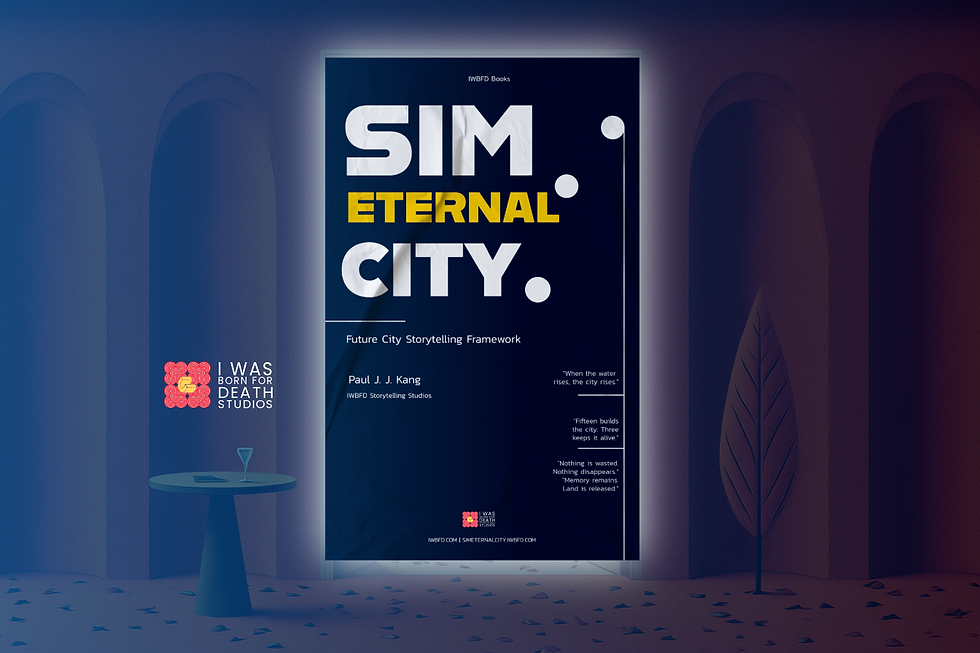
At the event, IWBFD Storytelling Studios presented its future-city storytelling framework “Sim Eternal City,” alongside the book that embodies it, as well as brand IPs that generate campaigns and actions — including “We Kings Creative Act” and the “Happy Death Day Collection.”

“Sim Eternal City” is a future-city storytelling framework centered on dual citizenship between elderly people and humanoid robot citizens. It brings IWBFD’s philosophy — that every ending contains a new beginning — to life at the scale of the city and space. The book containing the world of this framework has been published through IWBFD Books.
“We Kings Creative Act” unfolds IWBFD’s philosophy at the scale of the individual and personal agency, while the “Happy Death Day Collection” does so at the scale of time and ritual, each presented as an Original IP. In particular, the “Happy Death Day Collection” can be seen as a brand activity built on the concept of giving courage to people facing every kind of ending. The three IPs draw attention as outcomes of a “story-doing” approach — going beyond mere storytelling to lead into real campaigns and actions.

IWBFD Storytelling Studios also introduced “No Stone Tombstone,” a future cemetery and memorial urban solution. Starting from the idea of a place of remembrance without headstones, “No Stone Tombstone” proposes a future-oriented memorial solution that holds death and memory anew within the city. It is directly connected to IWBFD’s philosophy of viewing death not as an end but as a transformation, and of integrating preservation, connection, and memory into urban space.

Under the philosophy of “I Was Born For Death / New For The Olds / Life For Death,” IWBFD Storytelling Studios continues its city storytelling work — reinterpreting death not as an end but as a transformation, and aging not as decline but as self-directed agency — by visiting and staying in new cities.


Comments